Western Academic Leadership Forum Sidebar
Facing Complexity, Finding Solutions
These are the meeting resources from the 2026 Forum Annual Meeting which took place from April 1-3, 2026 in Albuquerque, NM.
Keynote: Academic Leadership in the AI Era: Turning Challenges into Competitive Strengths
Higher education institutions face mounting pressure to navigate an AI landscape that is reshaping teaching, learning, and academic operations faster than most can adapt. This keynote examines how chief academic officers can move beyond reactive responses to AI and build institutional frameworks that transform disruption into strengths. Together, we will explore the current state of AI, the challenges it is creating for institutions, and how to deliberately leverage AI rather than merely respond to it.
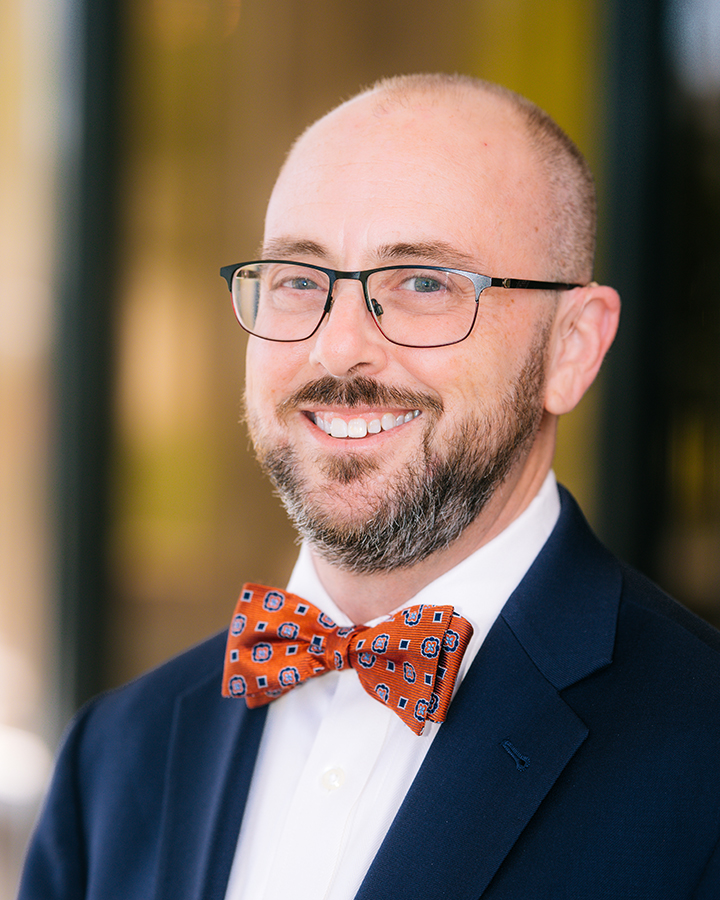
Van Davis
Executive Director, WCET – the WICHE Cooperative for Educational Technologies and Vice President, Digital Learning
Van Davis
Executive Director, WCET – the WICHE Cooperative for Educational Technologies and Vice President, Digital Learning
Van Davis – Van joined WCET in 2021 as chief strategy officer, and in 2025, he became WCET’s executive director and WICHE’s vice president for digital learning. Davis oversees all strategic and operational responsibilities of WCET’s membership, the State Authorization Network (SAN) that assists institutions with interstate compliance, and Every Learner Everywhere, which advocates for successful academic outcomes for all postsecondary education students through advances in digital learning.
Van has over 25 years of experience in higher education as a faculty member, academic administrator, state policy maker, and edtech leader. He holds a Master’s and PhD in 20th Century US history with an emphasis in civil rights from Vanderbilt University and a Bachelor’s in history from Southwestern University. Prior to joining WCET and WICHE, Davis served as principal at Foghlam Consulting, associate vice president at Blackboard Inc., director of innovation at the Texas Higher Education Coordinating Board, and a faculty member and academic administrator at several public and private universities with historically underrepresented student populations.
Van’s expertise includes artificial intelligence policy, federal and state distance education policy, degree completion initiatives, competency-based education, the cost and price of distance education, and the future of higher education and digital learning.
Please reach out if with media inquiries or if you are interested in speaking with Van.
Van lives outside of Austin, Texas, and will be relocating to WICHE headquarters in Boulder, CO, later this summer with his beloved wife, Lisa, and two cats. When not working, Van collects Lego models and dreams of the day he can complete his western US camping trip.

Cut and Reappropriate: Strategic Reinvestment in the Utah System of Higher Education
In 2025, the Utah Legislature required public institutions to cut 10% of their budgets and reinvest in high demand programs. This session will describe how institutions in the Utah System of Higher Education are finding solutions while facing this complex new requirement and will discuss potential implications for other states.
TJ Bliss
Associate Commissioner for Academic Affairs, Utah System of Higher Education

TJ Bliss
Associate Commissioner for Academic Affairs, Utah System of Higher Education
TJ Bliss, Ph.D., is the associate commissioner for academic affairs and chief academic officer for the Utah System of Higher Education. He is also a clinical assistant professor in education leadership at the University of Idaho. Previously, he served as the chief academic officer for the Idaho State Board of Education and has held several other executive leadership positions in governmental, philanthropic, and non-profit sectors. Bliss received a Ph.D. in education research and B.S. in microbiology from Brigham Young University and an M.S. in biology from the University of Nebraska.

Chris Guymon
Interim Provost and Vice President of Academic Affairs, Utah Tech University
Chris Guymon
Interim Provost and Vice President of Academic Affairs, Utah Tech University
Christopher Guymon, Ed.D., serves interim provost and vice president of academic affairs at Utah Tech University. He has been privileged to serve at two distinctive universities—The University of Chicago and Utah Tech University—and in these universities, he has served as an interim provost, associate provost, assistant provost, dean, senior associate dean, and director of graduate studies. During his tenure, he has led the development and administration of several degree programs, significantly increased enrollment, built strategic relationships in Europe, East Asia, and South Asia, and led a $3 million fundraising campaign to support students and faculty.

Steven Hood
Assistant Commissioner for Academic Affairs, Utah System of Higher Education (USHE)
Steven Hood
Assistant Commissioner for Academic Affairs, Utah System of Higher Education (USHE)
Steven Hood, Ph.D., is assistant commissioner for academic affairs in the Utah System of Higher Education (USHE). His responsibilities include oversight of new academic program proposals, general education, credit for prior learning, and student transfer within the eight public colleges and universities in USHE. He served as the academic vice president and provost at Snow College in Utah and as the director of the first-year core curriculum program at Ursinus College in Pennsylvania. He serves on the Utah Launch Years Math Task Force in conjunction with the Charles A. Dana Center at the University of Texas.

WeR1: How to Develop a Strategic, Multi-Faceted, and Adaptive Faculty Research Success Program through Effective Organizational Partnerships
This session presents UNM’s WeR1 framework, a strategic approach to designing and sustaining a multifaceted faculty research success program built through organizational partnerships. Attendees will explore our modular approach used to address faculty needs across career stages and disciplines and how to adapt this structure to their institution’s needs and priorities.

Melissa Emery Thompson
Assistant Vice President for Research, University of New Mexico

Melissa Emery Thompson
Assistant Vice President for Research, University of New Mexico
Melissa Emery Thompson, Ph.D., is a professor of anthropology and has served as assistant vice president for research at the University of New Mexico since 2021. She focuses her efforts on reducing barriers to research participation and developing programming that celebrates and enhances research success and professionalization of students, postdocs, and faculty. As a faculty researcher, she has published over 160 original research articles and received over $10 million in grant funding. Emery Thompson received her B.S. in anthropology and human biology from Emory University and an A.M. and Ph.D. in anthropology from Harvard University.

Ellen Fisher
Vice President for Research, University of New Mexico
Ellen Fisher
Vice President for Research, University of New Mexico
Ellen Fisher, Ph.D., serves as the vice president for research at the University of New Mexico. She provides leadership for the research enterprise, oversees research compliance, research development, and faculty and student success initiatives, collaborating broadly to enhance, enable and advance the research and scholarship of students, faculty and staff. Previously, she served as assistant vice president for strategic initiatives at Colorado State University and has been a professor in chemistry since 1993. Fisher received her B.S. in chemistry and math (double major) from Texas Lutheran College (now University) and Ph.D. in physical-analytical chemistry from the University of Utah.

How Investing in Faculty to Improve Student Experience Can Build Institutional Trust
How can institutions prepare faculty for the complex life and belonging challenges that routinely interfere with students’ engagement in learning? We describe a program at scale enabling faculty to design equitable classroom learning environments — a program that 98% of students respond to with a positive “trust and fairness” rating of their instructors.

Pamela Cheek
Vice Provost for Student Success, University of New Mexico

Pamela Cheek
Vice Provost for Student Success, University of New Mexico
Pamela Cheek is vice provost for student success and professor of French at the University of New Mexico (UNM). She leads programs to improve educational opportunity and access and to enable faculty and students to thrive in the classroom. She is recognized outside of UNM for her work on the Student Experience Project (Urban Serving Universities/APLU). She earned her B.A. from Harvard University and her Ph.D. from Stanford University as a Mellon Fellow in the Humanities. Her second book received the Laura Shannon Prize in Contemporary European Studies. She enjoys biking, hiking, and paddling in the beautiful Southwest.

Sushilla Knottenbelt
Associate Dean for Student Success, University of New Mexico
Sushilla Knottenbelt
Associate Dean for Student Success, University of New Mexico

Sushilla Knottenbelt, Ph.D., is a principal lecturer in the Department of Chemistry and Chemical Biology, faculty lead for the UNM Student Experience Project and associate dean for student success in the College of Arts & Sciences. Her work focuses on improving retention and expanding resources available to faculty and students to ensure that every student is supported to reach their full potential. Previously, she served as undergraduate director of the combined BA/MD degree program, a pipeline program to address the physician shortage in New Mexico. She received her Ph.D. and Master’s in chemistry from the University of York, United Kingdom.

Erin Shortlidge
Executive Director of the Center for Teaching and Learning, University of New Mexico
Erin Shortlidge
Executive Director of the Center for Teaching and Learning, University of New Mexico
Erin Shortlidge, Ph.D. is the executive director of the Center for Teaching and Learning and professor of biology at the University of New Mexico. She is a STEM education researcher who focuses on studying and implementing best practices in teaching and learning. Shortlidge comes to the University of New Mexico from Portland State University where she was an associate professor of biology and biology education and an interim vice provost for student success. Shortlidge earned a B.F.A. in dance from the University of Missouri-Kansas City, an A.S. in biology from Harold Washington College in Chicago, and her Ph.D. in biology at Portland State University in Oregon.

When Everyone Plans to Grow: Examining Enrollment Goals and Market Capacity in WICHE States
As Western states face declining high school graduate populations, what enrollment futures are institutions planning? When we add them up, is the math even possible? This session presents findings from a comprehensive analysis of strategic enrollment plans at WICHE public comprehensive universities, combined with demographic projections and institutional market share data. By comparing institutional enrollment goals against WICHE demographic projections and calculating needed market-share shifts, the analysis reveals where regional capacity exists for growth and where institutions may be planning for students who don’t exist—or planning to take them from each other without acknowledging the competition.
These findings will serve as a springboard for discussion about the results, pressures on institutional leaders to increase enrollment, and potential, realistic alternatives.

Gwen Sharp
Interim Vice Provost and Vice President of Academic Affairs, Nevada State University
Gwen Sharp
Interim Vice Provost and Vice President of Academic Affairs, Nevada State University
Gwen Sharp, Ph.D., is interim provost and vice president of academic affairs at Nevada State University, providing leadership for the Division of Academic Affairs and serving as the accreditation liaison officer. She previously served as vice provost of faculty affairs and research, an associate dean, and a department chair at NSU. Sharp is also a professor of sociology; she received her B.A. in sociology from the University of Oklahoma and her M.S. in rural sociology and Ph.D. in sociology from the University of Wisconsin-Madison. She is interested in evidence-based, ethical leadership and transforming career pathways for the wide array of students looking to higher education as a ladder to social mobility.

Micro-Pathways: A Model to Drive Statewide Transformation Efforts in Montana
This session will highlight the Montana University System partnership with Education Design Lab to transform their work with employer partners to design and deliver in demand micro-pathways that lead to good paying jobs. Presenters will describe this first of its kind effort and share newly designed micro-pathways in healthcare, technology, the trades, and education. Participants will describe the neutral convener approach through the facilitation of a 5-phase human-centered design process.

Angela McLean
Director, American Indian and Minority Achievement and K-12 Partnerships, Montana University System
Angela McLean
Director, American Indian and Minority Achievement and K-12 Partnerships, Montana University System
Angela McLean, Ed.D. is the director of American Indian and minority achievement and K-12 partnerships at the Montana University System Office of the Commissioner of Higher Education. McLean previously served as Montana’s 31st lieutenant governor and was a classroom teacher for 20 years. McLean is also a former vice chair of the Montana Board of Public Education and a former chair of the Montana University System Board of Regents. McLean received a B.S. in secondary education from Western Montana College, her M.A. in curriculum and instruction from the University of Montana and her Ed.D. in educational leadership from Montana State University.

Minzi Thomas
Senior Education Designer, Education Design Lab
Minzi Thomas
Senior Education Designer, Education Design Lab
Minzi A. Thomas, Ed.D. is a senior education designer at Education Design Lab. She is currently leading the design of micro-pathways for the Montana University System in the Year-to-Career initiative, which includes tribal colleges. Thomas previously served as director of professional development and enrollment management at Meharry Medical College and held roles at the Tennessee Higher Education Commission and the Tennessee Department of Labor. Thomas received a B.S. in journalism and electronic media from the University of Tennessee, Knoxville, a M.A. in communication studies from the University of Louisiana, Monroe; and a Ed.D. in higher education leadership from Tennessee State University.

Maximizing Institutional Capacity Through Shared Services: A Collaborative Approach
This session presents innovative approaches from the University of New Mexico to sustain institutional capacity amid financial constraints. Through shared service case examples and lessons learned, participants will gain practical strategies for maintaining or expanding capacity, even when facing staff reductions, limited resources, and increasing operational demands in higher education.

Nicole Dopson
assistant vice president for academic resource management, University of New Mexico

Nicole Dopson
assistant vice president for academic resource management, University of New Mexico
Nicole Dopson is assistant vice president for academic resource management in academic affairs at the University of New Mexico (UNM), overseeing finance, academic facilities, capital planning, and the Fiscal Shared Service Center. She leads fiscal and planning activities for schools, colleges and divisions reporting to the provost, serving as academic affairs’ voice on budget and planning matters across UNM. Dopson previously worked in corporate accounting and has held various fiscal and management roles during her 20-year UNM tenure, including 15 years in academic affairs. Dopson holds a bachelor’s in business administration and a master’s in accounting from UNM.

Charla Orozco
Director of Institutional Analytics, University of New Mexico
Charla Orozco
Director of Institutional Analytics, University of New Mexico
Charla Orozco serves as director of institutional analytics at the University of New Mexico, where she leads strategic data initiatives to support student success and institutional effectiveness. With more than a decade of experience in research and analytics, she specializes in data visualization, equity-focused analysis, and advancing evidence-informed decision making in higher education. She holds two master’s degrees: a M.A. in Latin American studies and a M.S. in cybersecurity and business analytics. Her work centers on leveraging data to illuminate student experiences and strengthen institutional policy and practice.

Using Alternative Futures Scenario Building to Envision the Futures of Higher Education
This workshop introduces participants to alternative futures thinking to better understand and plan for uncertainty in higher education. Using the Mānoa School’s four generic scenarios, participants will explore trends, envision preferred futures, and identify strategies to navigate trends and emerging issues shaping higher education over the next 20–50 years.

Debora Halbert
Associate Vice President for Academic Strategy, University of Hawai‘i System
Debora Halbert
Associate Vice President for Academic Strategy, University of Hawai‘i System
Debora J. Halbert, Ph.D., J.D., is the vice president for academic strategy for the University of Hawaiʻi System (UH System) and professor of political science at the University of Hawai‘i at Mānoa, where she currently serves as the senior executive responsible for academic planning, policy development, and student success across the state’s ten public higher education institutions. In this role, Halbert is responsible for oversight of academic affairs, student affairs, institutional research, and statewide initiatives. Previously, Halbert served as associate vice president for academic programs and policy at the UH System and associate vice chancellor for academic affairs at UH Mānoa. She holds a Ph.D. in political science and a J.D. from the University of Hawaiʻi at Mānoa. She has published extensively on intellectual property, technology policy, and global political economy.
