×
Strengthening the Nursing Workforce in the West
The nursing workforce is the foundation of a strong and responsive healthcare system. Across the West, states are working to address persistent challenges to the supply and demand of registered nurses (RNs) and other healthcare professionals.
In 2023, WICHE convened a series of policy roundtables with stakeholders from across the West. These discussions focused on identifying scalable strategies to strengthen the nursing workforce and address the ongoing nursing workforce shortage now and in the future. Participants included nursing school faculty and administrators, hospital and clinic leaders, state boards of nursing, nursing workforce centers, nursing associations, higher education representatives, and state healthcare and workforce agencies. With insights from these conversations, WICHE developed a series of policy briefs that highlight common regional challenges that states, institutions, and systems are facing, as well as actionable solutions to address these nursing workforce challenges.
One of the key themes in these discussions was the unique challenges of developing a rural nursing workforce. These challenges are shaped by distance, financial constraints, and limited access to specialist healthcare providers. WICHE is further exploring this work through a five-year research study as part of MDRC’s Rural Research Center. This research uses a case study approach to examine three “train-in-place” models in nursing programs across the West.
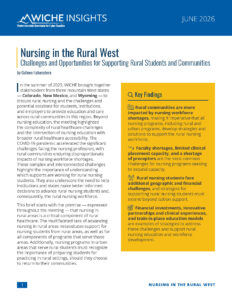
Latest Policy Brief: Nursing in the Rural West
June 11, 2026
Explore the most recent analysis and recommendations addressing critical nursing workforce challenges across the West. This brief highlights the challenges and opportunities in developing the rural nursing workforce. This includes how travel and distance are barriers for nursing students and how broader healthcare challenges in rural communities affect access to clinical education.
Read the Latest BriefNursing Workforce
Demand for nurses continues to grow as healthcare systems respond to an aging population with an increasing level of chronic disease. Registered nurses and nurse practitioners play a critical role in ensuring patient access, maintaining safe ratios of health professionals to patients, and improving health outcomes.
Despite growth in the total number of nurses, a significant need remains, and many states continue to experience a mismatch between the supply of nurses and community needs.
Key Drivers of the Nursing Workforce Shortage
Several factors contribute to the mismatch between nursing supply and demand:
- Aging Workforce and Retirements: A significant portion of the nursing workforce is approaching retirement age, reducing the overall supply of experienced nurses and nursing educators.
- Wage Disparities and Workforce Retention: Wage disparities, demanding work environments, and burnout contribute to difficulties in retaining nurses.
- Growing Healthcare Demand: An aging population with increasingly complex health needs continues to place new pressures on healthcare systems and the nurses who support them.
- Educational Capacity Constraints: While interest in nursing programs remains high, many qualified applicants are unable to enroll due to limited faculty, clinical sites, and institutional resources.
Factors Impacting Educational Capacity Constraints
Pay Disparity
The median annual salary for nursing educators is $49,200 less than the median annual salary for advanced practice nurses.
Faculty Vacancies
In 2022, a total of 1,588 full-time faculty positions were vacant with a vacancy rate of 7%.
Faculty Retirements
It is projected that 1/3 of the nursing faculty workforce will retire by 2025.
Limited Capacity to Enroll More Students
Nursing schools turned down over 90,000 applications in 2021 due to limitations in clinical sites, faculty, and resource constraints.
Source: American Association of Colleges of Nursing, https://www.aacnnursing.org/news-data/fact-sheets/nursing-faculty-shortage.
Past Briefs and Resources
Access previously published policy briefs and supporting resources that document ongoing challenges and strategies related to the nursing workforce. These materials provide additional context and examples of promising approaches to nursing workforce development.
Emerging Solutions for Strengthening the Nursing Workforce
The policy briefs identify a range of strategies to address current and future workforce needs, including:
- Increasing financial investments into program capacity building, including faculty pay
- Leveraging federal resources to support preceptor training
- Expansion of academic-practice partnerships and dedicated education units to enhance clinical partnerships and student learning
Together, these approaches support a more resilient and responsive nursing workforce capable of meeting the region’s evolving healthcare needs.
Project Leads