×
Newscap
The bimonthly newsletter from WICHE serving Western states, students, and institutions since 1953
Courtesy of the Arizona State Library, select early issues of WICHE newsletters are now digitized and indexed online.
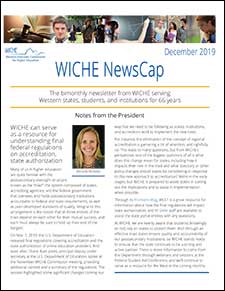
NewsCap | December 2019
The newsletter from WICHE serving Western states, students, and institutions since 1953.
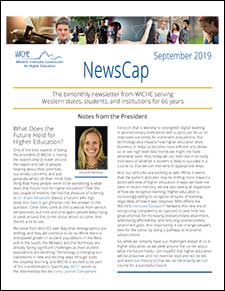
NewsCap | September 2019
The newsletter from WICHE serving Western states, students, and institutions since 1953.
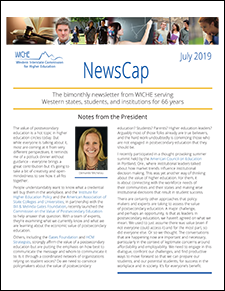
NewsCap | July 2019
The newsletter from WICHE serving Western states, students, and institutions since 1953.
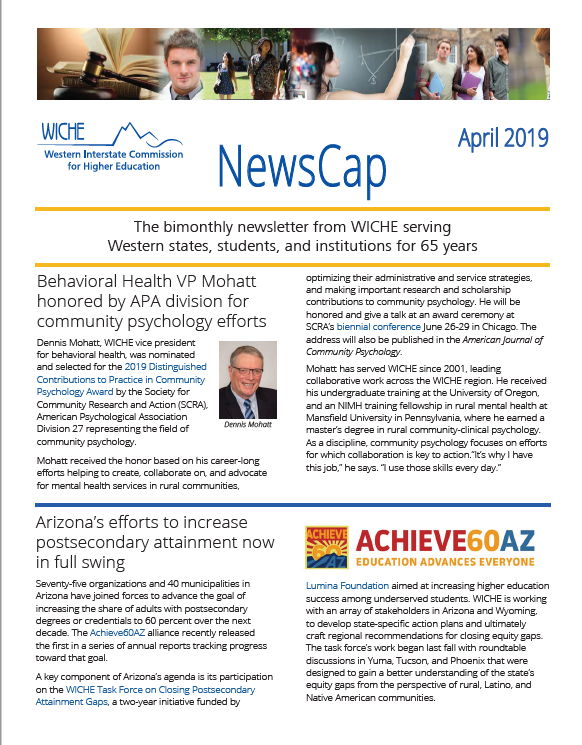
NewsCap | April 2019
The newsletter from WICHE serving Western states, students, and institutions since 1953.
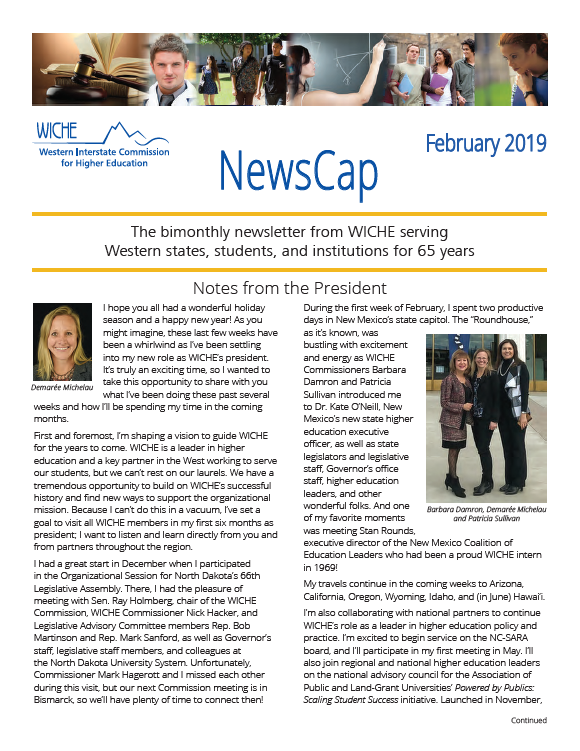
NewsCap | February 2019
This is the February 2019 edition of WICHE's bimonthly newsletter.
Newsletter
18Dec
2018
2018
NewsCap: December 2018
This is the December 2018 edition of the biannual newsletter of the Western Interstate Commission for Higher Education.
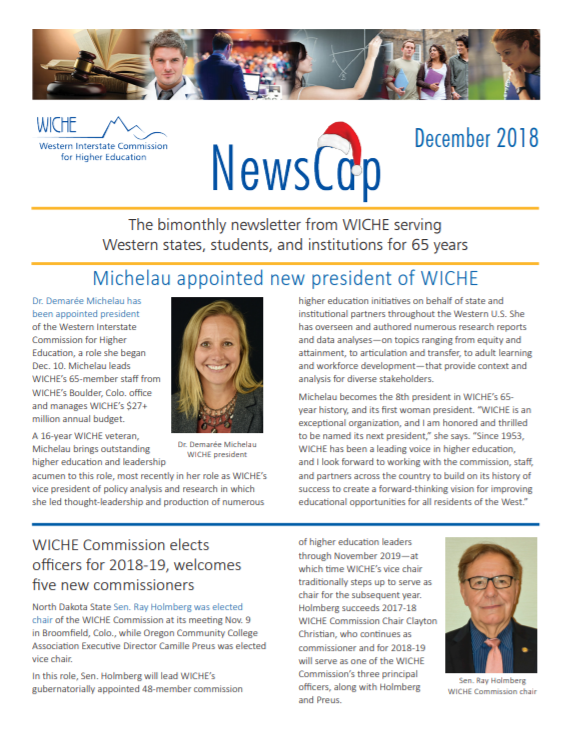
NewsCap | December 2018
The newsletter from WICHE serving Western states, students, and institutions since 1953.
Newsletter
15Oct
2018
2018
NewsCap: October 2018
This is the October 2018 edition of the biannual newsletter of the Western Interstate Commission for Higher Education.
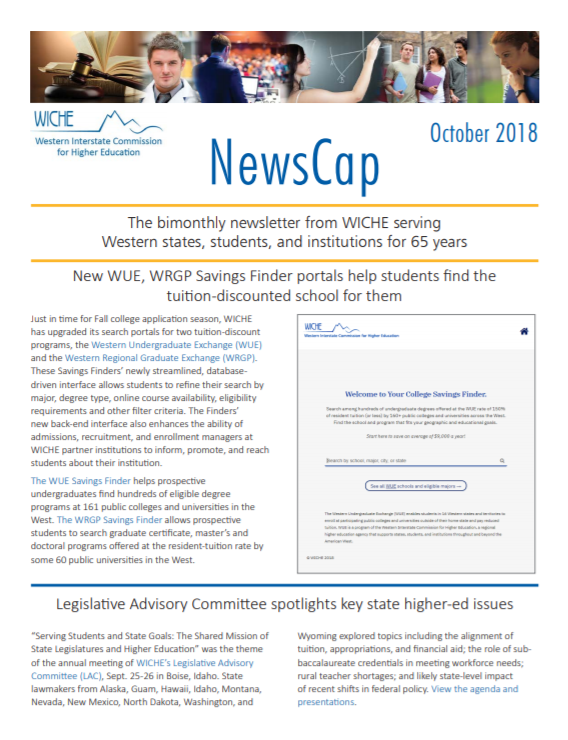
NewsCap | October 2018
The newsletter from WICHE serving Western states, students, and institutions since 1953.
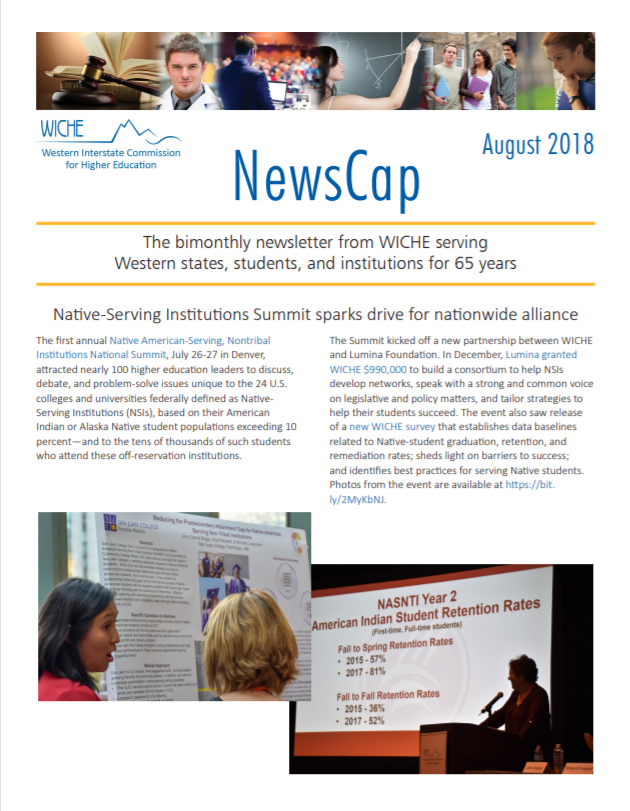
NewsCap | August 2018
This is the August 2018 edition of the newsletter of the Western Interstate Commission for Higher Education.
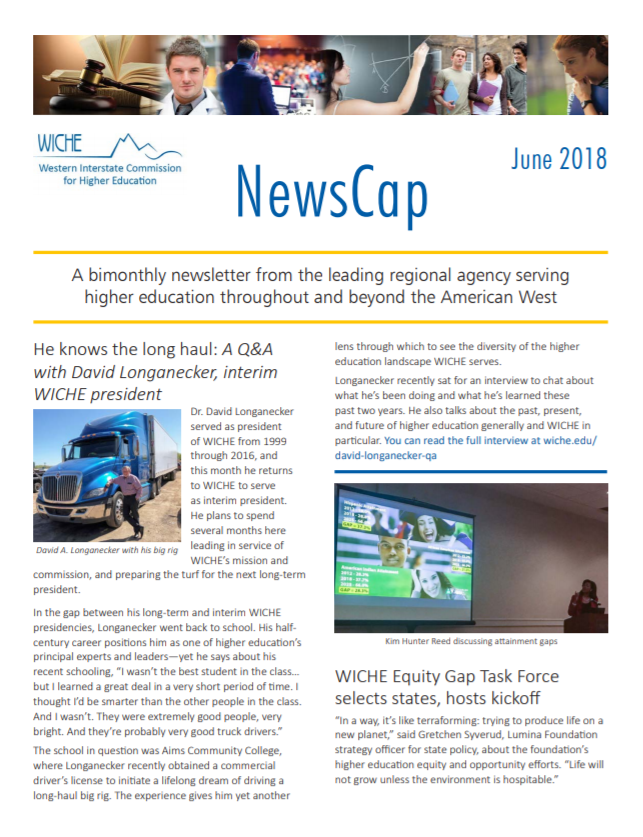
NewsCap | June 2018
This is the June 2018 edition of the newsletter of the Western Interstate Commission for Higher Education.
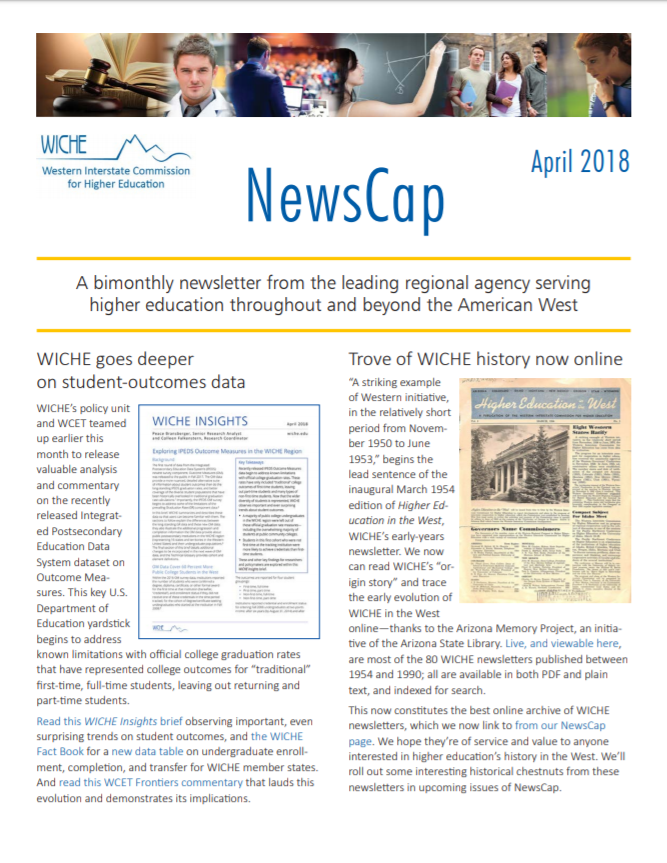
NewsCap | April 2018
This is the April 2018 edition of the newsletter of the Western Interstate Commission for Higher Education.
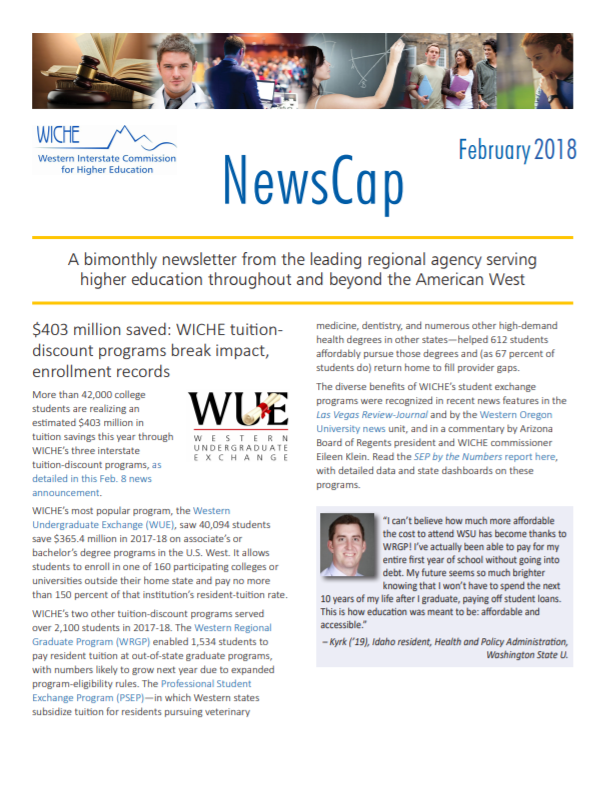
NewsCap | February 2018
This is the February 2018 edition of the newsletter of the Western Interstate Commission for Higher Education.
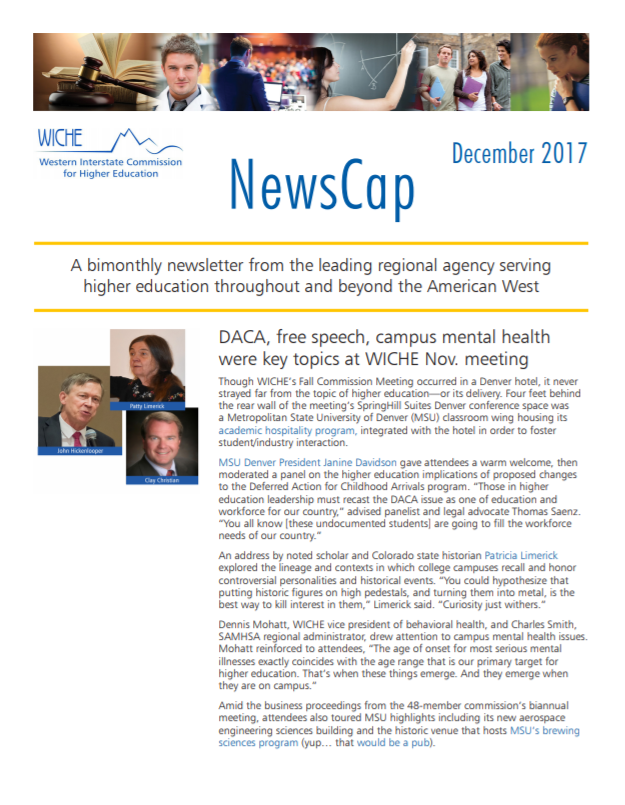
NewsCap | December 2017
This is the December 2017 edition of the biannual newsletter of the Western Interstate Commission for Higher Education.
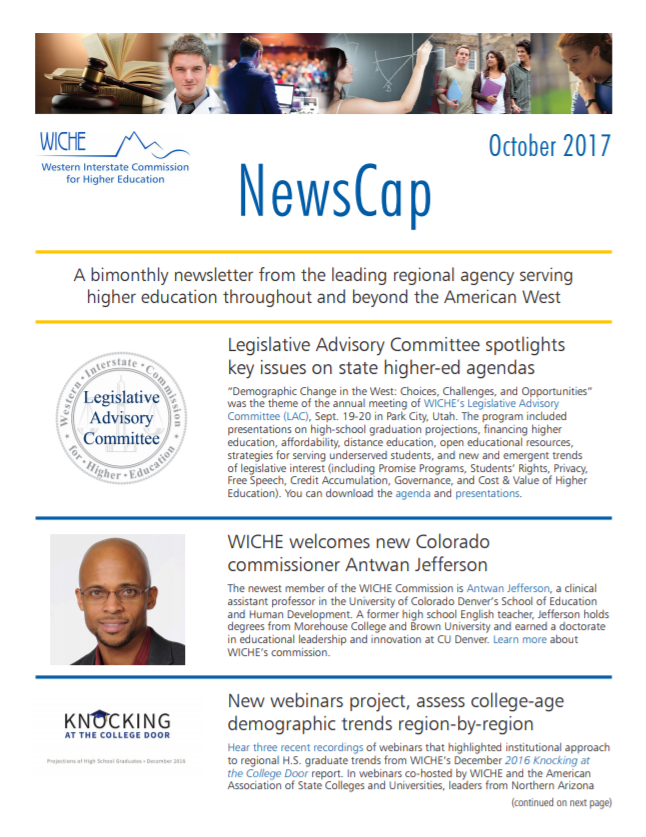
NewsCap | October 2017
This is the October 2017 edition of the biannual newsletter of the Western Interstate Commission for Higher Education.
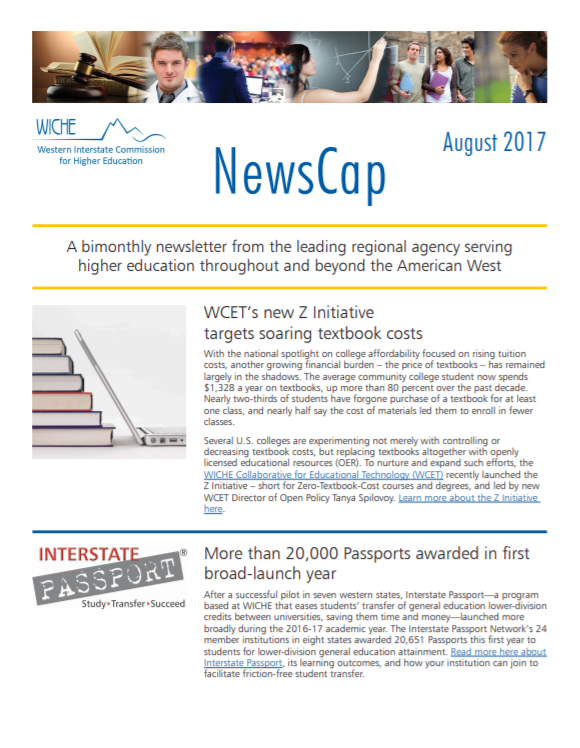
NewsCap | August 2017
This is the August 2017 edition of the biannual newsletter of the Western Interstate Commission for Higher Education.
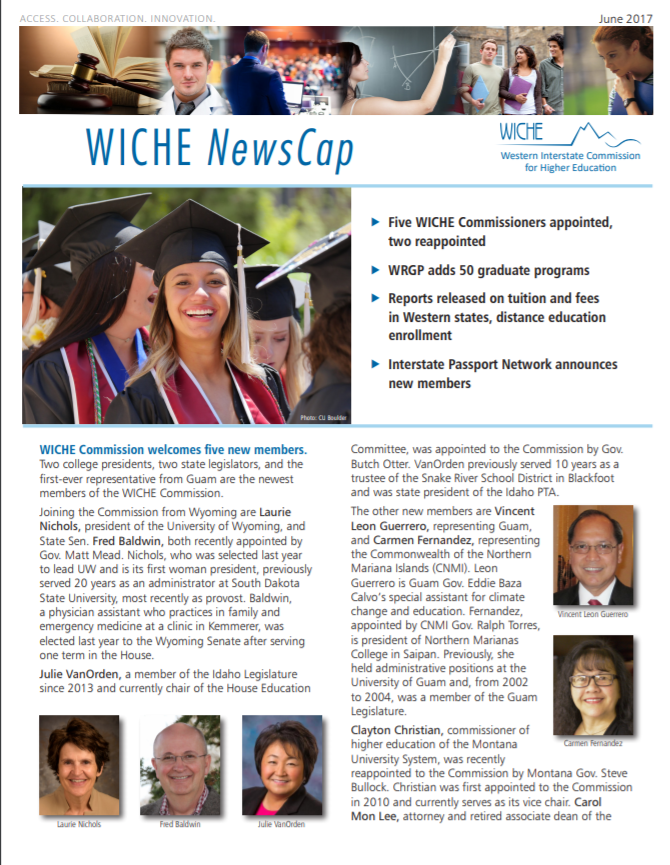
NewsCap | June 2017
This is the June 2017 edition of the biannual newsletter of the Western Interstate Commission for Higher Education.
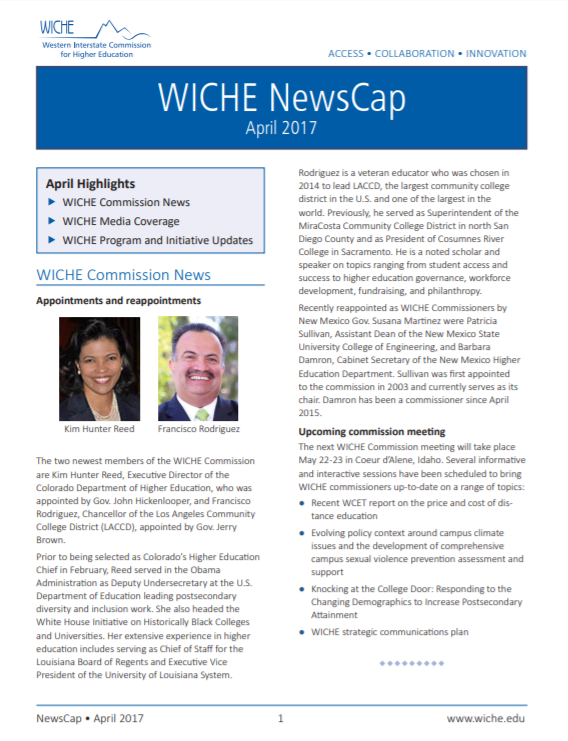
NewsCap | April 2017
This is the April 2017 edition of the biannual newsletter of the Western Interstate Commission for Higher Education.
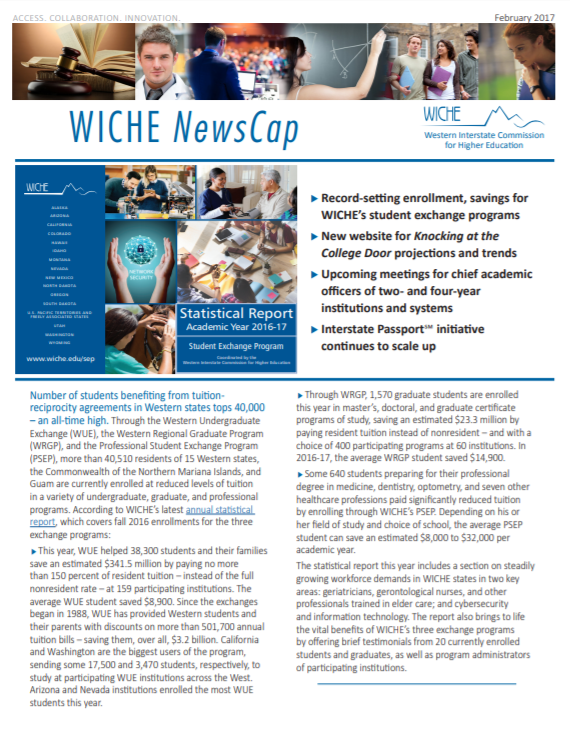
NewsCap | February 2017
This is the February 2017 edition of the biannual newsletter of the Western Interstate Commission for Higher Education.
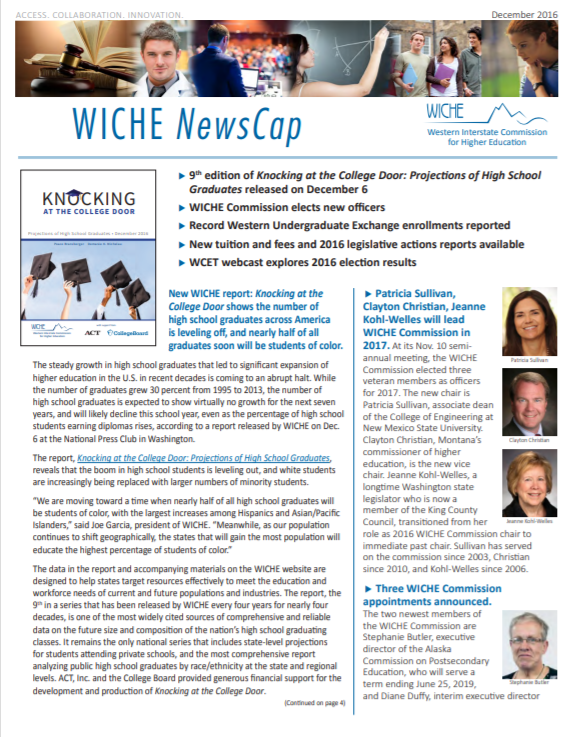
NewsCap | December 2016
This is the December 2016 edition of the biannual newsletter of the Western Interstate Commission for Higher Education.
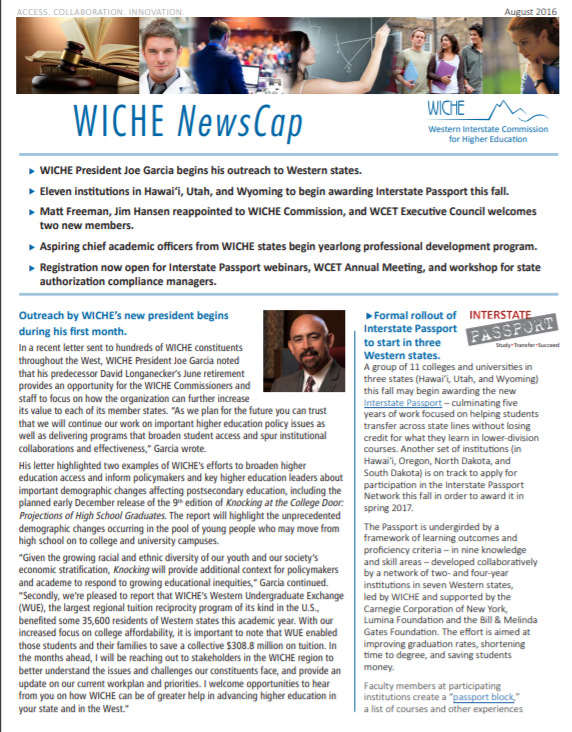
NewsCap | August 2016
This is the August 2016 edition of the biannual newsletter of the Western Interstate Commission for Higher Education.
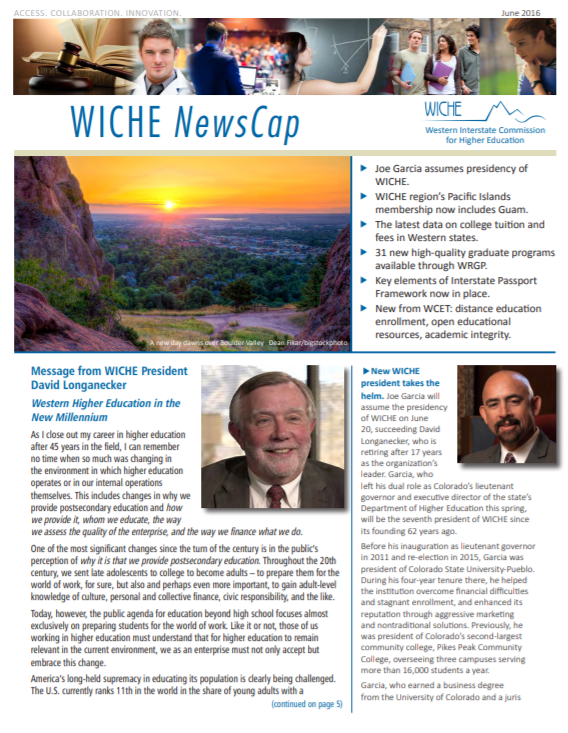
NewsCap | June 2016
This is the June 2016 edition of the biannual newsletter of the Western Interstate Commission for Higher Education.
NewsCap | March 2016
This is the March 2016 edition of the biannual newsletter of the Western Interstate Commission for Higher Education.
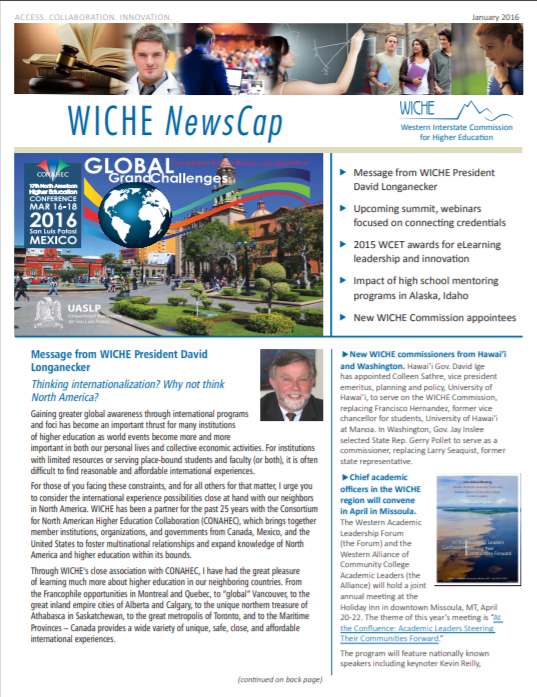
NewsCap | January 2016
This is the January 2016 edition of the biannual newsletter of the Western Interstate Commission for Higher Education.
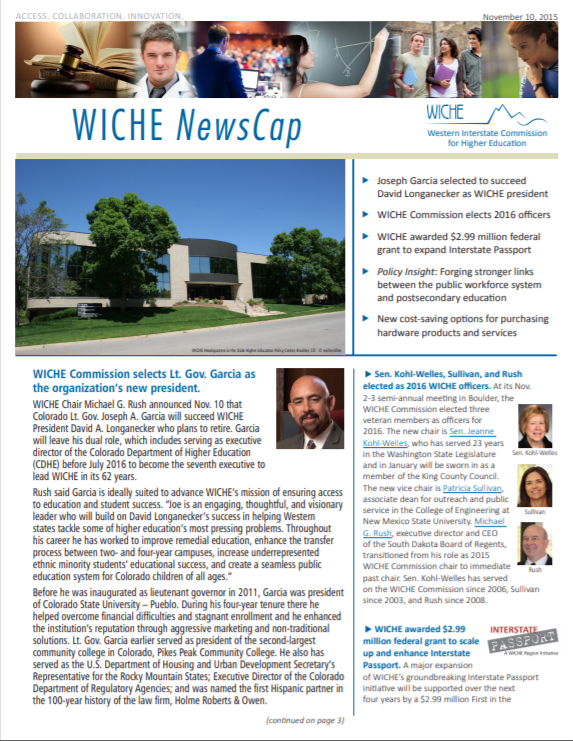
NewsCap | November 2015
This is the November 2015 edition of the biannual newsletter of the Western Interstate Commission for Higher Education.
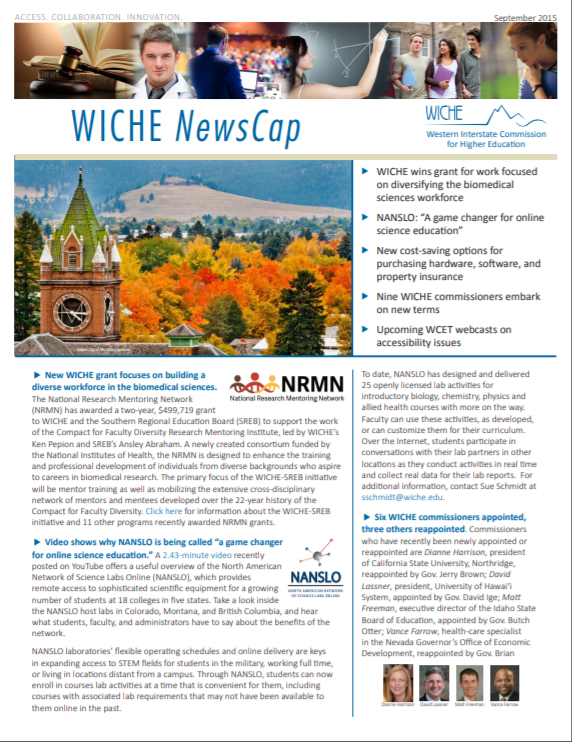
NewsCap | September 2015
This is the September 2015 edition of the biannual newsletter of the Western Interstate Commission for Higher Education.
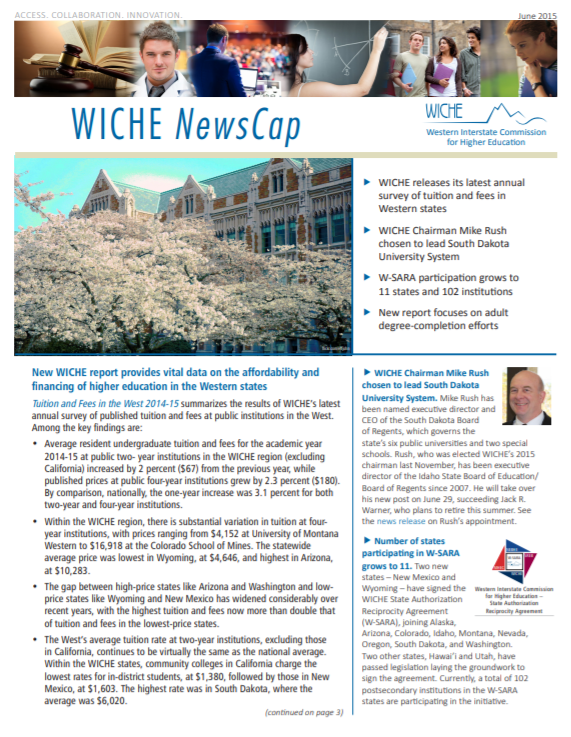
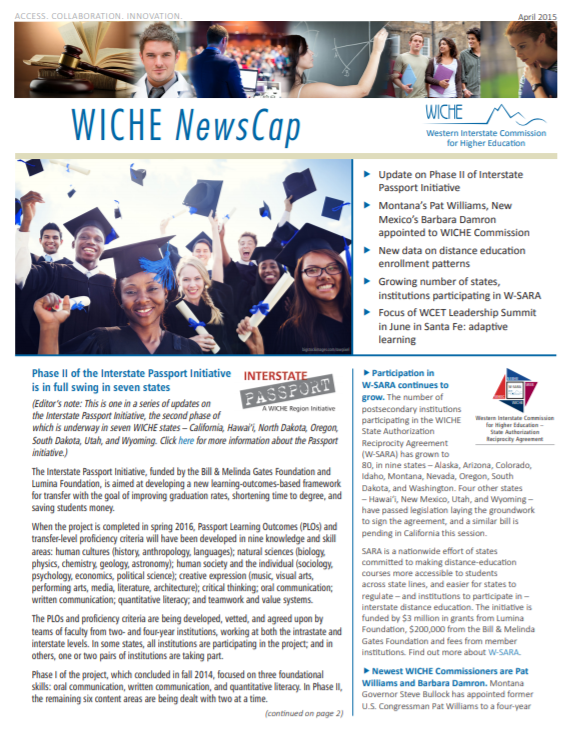
NewsCap | April 2015
This is the April 2015 edition of the biannual newsletter of the Western Interstate Commission for Higher Education.
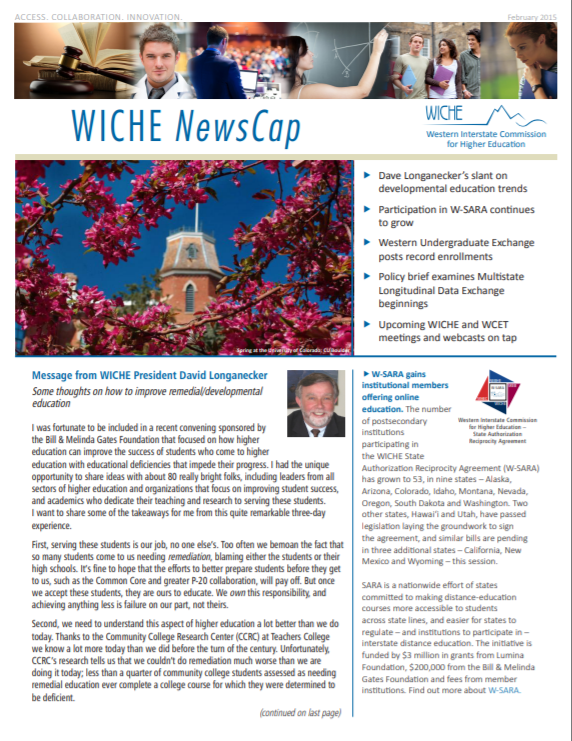
NewsCap | February 2015
This is the February 2015 edition of the biannual newsletter of the Western Interstate Commission for Higher Education.
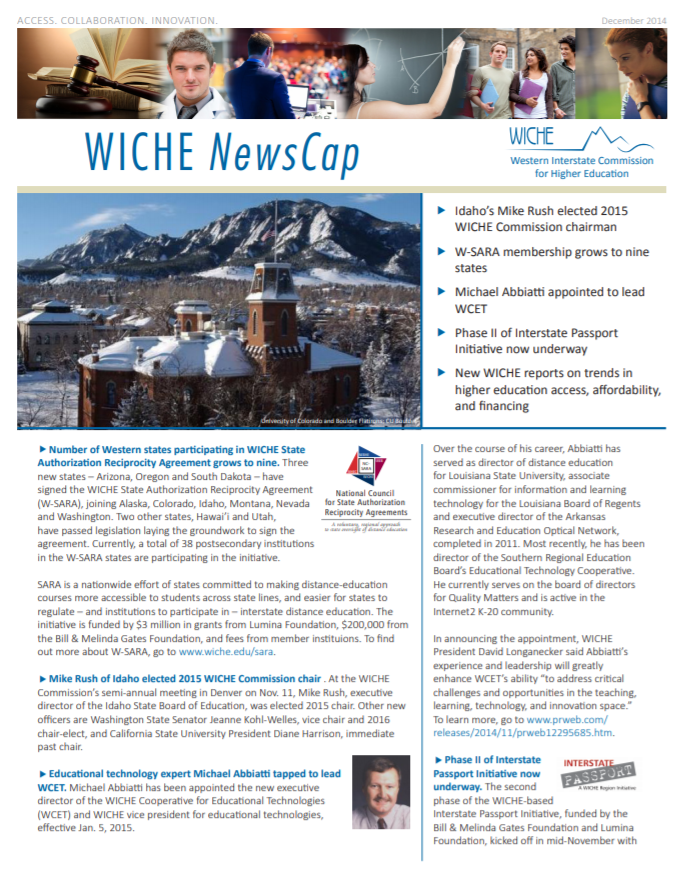
NewsCap | December 2014
The newsletter from WICHE serving Western states, students, and institutions since 1953.
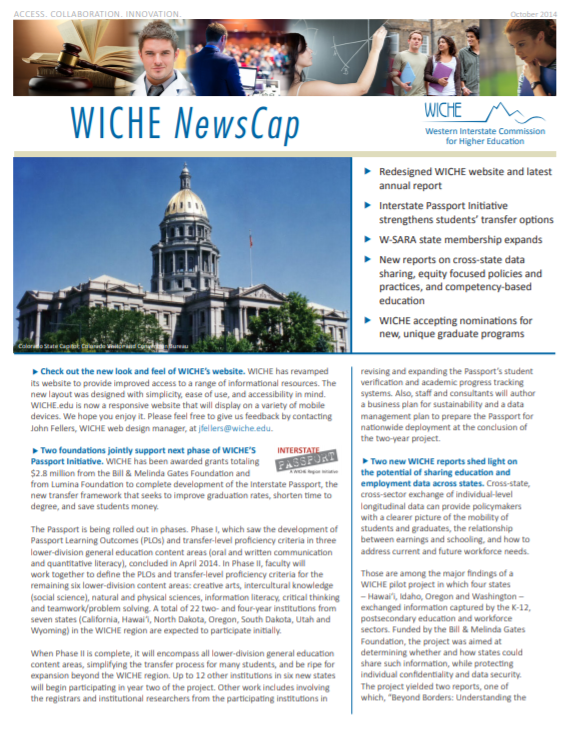
NewsCap | October 2014
The newsletter from WICHE serving Western states, students, and institutions since 1953.